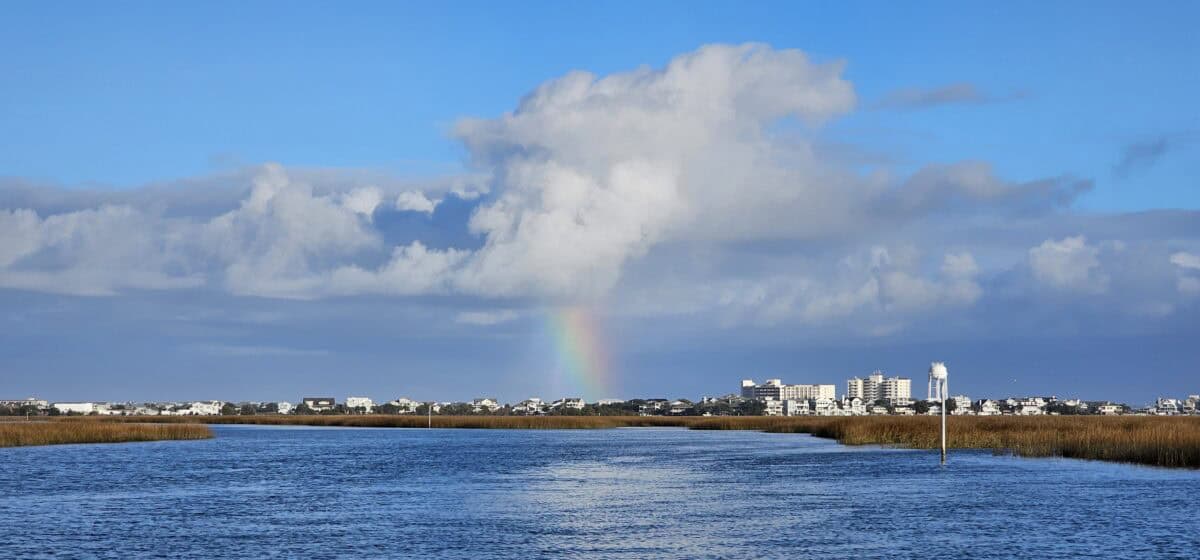
How do I find a Wilmington home’s flood zone, and how much is flood insurance? Enter the address at FEMA’s Flood Map Service Center (msc.fema.gov) to see its zone. According to FEMA’s NFIP data for the year ending May 2026, the average New Hanover County flood policy costs about $1,384 a year: roughly $1,504 inside high-risk zones and about $840 outside them. Your exact price depends on the home, its elevation, and which town it’s in.
If you’re weighing flood zones in Wilmington before you make an offer, start here. Here’s something I tell every buyer moving to the coast: insurance is part of your true monthly cost of owning here, and it works differently than it might have where you’re coming from. It’s not scary — it’s just something to understand before you’re under contract, not after. So let’s walk through it together.
Table of Contents
One important note up front: I’m a REALTOR®, not a licensed insurance agent. Nothing here is an insurance quote or advice on what coverage to buy — it’s a plain-English overview so you know what to ask. For actual coverage and pricing, you’ll work with a licensed insurance professional.
What changed in 2026
If you read up on flood zones in Wilmington a year or two ago, here’s what’s new for buyers as of September 2026:
- The NFIP is authorized through December 11, 2026. Congress extended the program in the Continuing Appropriations and Extensions Act, 2027, according to the National Association of REALTORS® and the Coalition for Sustainable Flood Insurance (September 2026). NAR’s NFIP lapse FAQ explains that if the program lapses, the NFIP can’t issue new or renewal policies until it’s reauthorized, while existing policies stay in force. If you’re closing near that date, ask your lender and a licensed insurance agent how it could affect your timeline.
- Some local flood insurance discounts changed. FEMA’s NFIP Community Status Book (OpenFEMA data refreshed August 25, 2026) shows Holden Beach moved to Community Rating System Class 6 on October 1, 2025, and Carolina Shores’ Class 9 rating took effect April 1, 2026. The full local list is below.
- Pender County’s flood maps were updated. New FEMA flood maps took effect January 17, 2025, for unincorporated Pender County, Burgaw, Surf City, Topsail Beach, Watha and St. Helena, according to the Federal Register notice of October 22, 2024. WECT reported on October 22, 2024 that flood zones expanded in many areas east of U.S. 421. For any address, check the current and any preliminary maps on North Carolina’s Flood Risk Information System.
- More people here carry flood insurance than you might think. About 17,400 NFIP policies were in force in New Hanover County on August 31, 2026, out of about 129,700 statewide, based on my count of FEMA’s OpenFEMA NFIP policy records (data as of September 8, 2026).
- Seller disclosures now ask about flooding. Since July 1, 2024, the North Carolina Real Estate Commission’s Residential Property and Owners’ Association Disclosure Statement has included flood questions, according to the Commission’s March 27, 2024 bulletin. Details are in the checklist section below.
The three coverages people mix up
In coastal Carolina, “insurance” can actually mean a few different policies:
- Homeowners insurance — your main policy, covering the structure and belongings for things like fire and theft.
- Wind (and hail) coverage — near the coast, windstorm damage is sometimes separated out or handled differently than a standard inland policy. It’s worth confirming exactly how a given home’s wind risk is covered.
- Flood insurance — a separate policy, usually through the National Flood Insurance Program (NFIP) or a private flood insurer. Standard homeowners policies typically do not cover flood damage.
The big “aha” for a lot of relocating buyers is that last one: flood is its own thing, and whether you’re required to carry it depends largely on the property’s flood zone.
Moving to Wilmington?
Grab my free Moving to Wilmington Buyer Guide — neighborhoods, price ranges, and the local stuff nobody tells you before you fall for a house between the river and the sea.
Flood zones in Wilmington, in plain English
FEMA maps every property into a flood zone. You don’t need to memorize the letters, but here’s the gist:
- High-risk zones (the ones starting with A or V) are considered special flood hazard areas. If you have a federally backed mortgage on a home here, your lender will generally require flood insurance.
- Moderate-to-low-risk zones (like X) don’t usually carry that requirement — though plenty of people in these zones still choose to carry flood coverage, because it’s often more affordable there and flooding doesn’t strictly follow the map lines.
Two homes on the same street can sit in different zones, and elevation matters a lot. That’s why I always encourage buyers to check the specific property rather than assume based on the neighborhood.
How to look it up yourself
- FEMA Flood Map Service Center (msc.fema.gov) lets you enter an address and see its flood zone.
- An elevation certificate (if the home has one) tells an insurer how high the structure sits relative to the base flood elevation — which can significantly affect flood premiums.
- Your insurance agent can pull quotes for a specific address, which is the only way to know real numbers.
🎥 Want to see this explained on video?
I’ve walked through this on my YouTube channel — sometimes it’s easier to see how flood zones and coastal coverage work than to read about them.
What flood insurance actually costs here
Real numbers help. According to FEMA’s National Flood Insurance Program (NFIP) policy data for the year ending May 2026, New Hanover County flood policies averaged:
- About $1,384 a year across all policies
- About $1,191 a year for single-family homes
- About $1,504 a year inside the mapped high-risk zones
- About $840 a year outside them
Those are averages, not quotes. Elevation, the home’s foundation, its replacement cost, and your deductible all move the price. Private flood insurers may quote differently from the NFIP, so it’s worth comparing both.
Why your town can change your flood premium
This is the detail most buyers never hear. FEMA’s Community Rating System (CRS) gives flood insurance discounts to communities that go beyond minimum floodplain standards. The discount depends on the jurisdiction a home sits in, not just its risk. According to FEMA’s NFIP Community Status Book (OpenFEMA data refreshed August 25, 2026, which includes CRS ratings effective April 1, 2026), local CRS classes and discounts are listed below. The first percentage applies to policies in the high-risk zone (the special flood hazard area), and the second to policies outside it:
- City of Wilmington: not in the CRS, so no CRS discount
- Unincorporated New Hanover County: Class 7, 15% / 5% (class effective October 1, 2018)
- Wrightsville Beach: Class 7, 15% / 5%
- Carolina Beach: Class 6, 20% / 10%
- Kure Beach: Class 8, 10% / 5%
- Unincorporated Brunswick County: Class 8, 10% / 5%
- Leland: Class 7, 15% / 5% (in the CRS since October 1, 2024)
- Oak Island: Class 6, 20% / 10%
- Unincorporated Pender County: Class 7, 15% / 5%
- Topsail Beach: Class 6, 20% / 10%
- Surf City: not in the CRS, so no CRS discount
So two similar homes with the same flood risk, one inside city limits and one just outside, can have different flood premiums. CRS classes are reviewed periodically, so confirm the current class with FEMA or the local floodplain office, and get a quote from a licensed agent.
Flooding doesn’t follow the map lines
FEMA maps show where flood insurance is required for federally backed loans. They don’t show everywhere it can flood. In FEMA’s OpenFEMA NFIP claims data (as of September 8, 2026), about a third of New Hanover County claims for losses from 2016 through 2026 (roughly 740 of 2,250) came from policies rated outside the high-risk A and V zones. That’s why I encourage buyers in lower-risk zones to at least price a policy. It’s often much cheaper there.
If a storm is ever headed our way, my Wilmington NC hurricane guide walks through what to do, step by step.
The questions to ask before you buy
- What flood zone is this specific property in, and is flood insurance required?
- Is there an elevation certificate on file?
- How is wind/hail coverage handled for this home, and at what cost?
- What have recent insurance quotes looked like for this address (not just the neighborhood)?
- Has the property had prior claims (a CLUE report can help here)?
Read the seller’s disclosure statement closely. Since July 1, 2024, North Carolina’s Residential Property and Owners’ Association Disclosure Statement has asked whether the property is in a federal or other designated flood hazard zone, whether it has had flood damage from events like heavy rain, storm surge, tidal flooding or river overflow, whether there’s a current flood insurance policy, whether there’s an elevation certificate, and whether the owner has filed a flood claim, including with the NFIP, as Coastal Review reported on July 19, 2024. Sellers can still answer “No Representation,” which isn’t the same as “no.” Confirm the flood zone with FEMA or the county either way.
Getting real quotes early — ideally during your due-diligence period — means no surprises later. I always build this into my buyers’ timeline so the full cost of a home is clear before we’re too far down the road.
Let’s plan for it together
Coastal living is absolutely worth it — you just want to go in with clear eyes on the numbers. I’m happy to connect you with trusted local insurance agents and make sure we check flood zones early on any home you’re serious about.

Text or call me, Tabi, at 910-983-8963, or reach out through www.makingilmhome.com. Let’s find your home between the river and the sea — the smart way.
Flood zone FAQs
How do I find the flood zone for a house in Wilmington, NC?
Enter the address at FEMA’s Flood Map Service Center (msc.fema.gov). The flood zone letter tells you whether the home is in a high-risk area (zones starting with A or V) or a moderate-to-low-risk area (such as X). Ask the seller whether an elevation certificate is on file.
How much is flood insurance in Wilmington, NC?
According to FEMA’s NFIP policy data for the year ending May 2026, the average New Hanover County flood policy costs about $1,384 a year: about $1,504 inside high-risk zones and about $840 outside them. Actual quotes depend on elevation, construction, coverage, and location.
Is flood insurance required in Wilmington, NC?
It’s generally required if the home is in a FEMA high-risk flood zone (A or V) and you have a federally backed mortgage. Outside those zones it’s optional, but many owners still carry it because flooding happens outside mapped zones too.
Why is flood insurance cheaper in some Wilmington-area towns?
FEMA’s Community Rating System gives discounts to communities with stronger floodplain programs. According to FEMA’s NFIP Community Status Book (data refreshed August 25, 2026), Carolina Beach, Oak Island and Topsail Beach are Class 6 (20% off in high-risk zones); unincorporated New Hanover County, unincorporated Pender County, Wrightsville Beach and Leland are Class 7 (15%); and Kure Beach and unincorporated Brunswick County are Class 8 (10%). The City of Wilmington and Surf City are not in the CRS.
Does homeowners insurance cover flooding in Wilmington?
No. Standard homeowners policies don’t cover flood damage, including storm surge. Flood coverage is a separate policy through the NFIP or a private flood insurer.
Do sellers in North Carolina have to disclose flooding?
Since July 1, 2024, North Carolina’s Residential Property and Owners’ Association Disclosure Statement has asked about flood hazard zones, past flood damage, current flood insurance, elevation certificates and flood claims. Sellers can answer No Representation, so confirm the flood zone with FEMA or the county and ask for the elevation certificate.
What happens to flood insurance if the NFIP lapses?
As of September 2026, the NFIP is authorized through December 11, 2026. According to the National Association of REALTORS®, during a lapse the NFIP can’t issue new or renewal policies, but existing policies stay in force until they expire and claims are paid while FEMA has funds. Private flood insurance isn’t affected. Ask your lender and a licensed insurance agent how a lapse could affect your closing.
Sources: FEMA NFIP policy data for New Hanover County, year ending May 2026 (average premiums); FEMA NFIP Community Status Book via OpenFEMA, refreshed August 25, 2026 (CRS classes and discounts, including ratings effective April 1, 2026); FEMA OpenFEMA NFIP Redacted Policies, data as of September 8, 2026 (policies in force on August 31, 2026); FEMA OpenFEMA NFIP Redacted Claims, data as of September 8, 2026 (claims by rated flood zone, 2016 to 2026); Federal Register, October 22, 2024 (Pender County flood map effective date); WECT, October 22, 2024; NC Flood Risk Information System (accessed September 2026); NC Real Estate Commission bulletin, March 27, 2024; Coastal Review, July 19, 2024; National Association of REALTORS® NFIP FAQ and Coalition for Sustainable Flood Insurance, September 4, 2026 (NFIP authorization through December 11, 2026). Figures change often; confirm details with FEMA or the county and get a quote from a licensed insurance agent.
Flood and insurance costs are a big piece of the monthly math here. If you want to see how they fit with everything else, here’s my look at the cost of living in Wilmington.
Tabetha Klein is a licensed REALTOR® with Coldwell Banker Sea Coast Advantage. This article is for general educational purposes only and is not insurance advice or a quote. Coverage requirements, availability, and pricing vary by property and are determined by licensed insurers and lenders — always consult a licensed insurance professional for your specific situation. Each office is independently owned and operated. Equal Housing Opportunity.
Before you make an offer at the coast
Weighing a beach place? See how a primary home, second home, and investment property differ at the beach, compare Wrightsville and Carolina Beach, and start with my guide to buying a home in Wilmington.
Doing the rest of your homework? See what homeowners insurance costs in Wilmington, how to size up hurricane risk before you buy, how to research any Wilmington neighborhood, and whether Wilmington is a good place to live.
Hear it from the people who do this for a living
On my podcast I put these questions to the people who do this work every day. Madison Williams, a coastal insurance specialist, explained why wind is usually its own policy and how a named storm deductible really hits — and Tyler Beverage of FinPoint Insurance covered the boats, golf carts and water toys most people forget to ask about.