“How long does it take to build a house?” is the first question every new-construction buyer asks me, and the honest answer is: longer than the construction part. Jon and I signed with our builder in September 2013, sitting at my in-laws’ kitchen table while I nursed our week-old daughter. When we built our home in Lake Linganore, the dirt-and-hammers part took about four and a half months. The whole thing, from signing to keys, took about nine. Here’s our real timeline, what the national numbers say, and what tends to stretch a build near Wilmington.
The short answer: in 2025 the average single-family home in the U.S. took about 8.8 months from building permit to completion: about 1.4 months waiting to start and 7.4 months of construction. Homes built for sale by a builder were fastest at about 7.4 months, homes built on your own lot by a hired contractor took about 11.7 months, and the South Atlantic region, which includes North Carolina, averaged about 7.6 months. Add a few months before the permit for plans, financing and selections. (Source: NAHB analysis of the Census Bureau’s Survey of Construction.)
Our build, date by date
I pulled these straight from the date stamps on our photos, so they’re about as real as it gets.
| Date | What happened | Weeks from clearing day |
|---|---|---|
| Sep 2013 | Signed with our builder, CE Rensberger | Before |
| Oct 2013 | Jon’s first sketch on top of the builder’s plan | Before |
| Nov 2013 – Feb 2014 | Plans finalized, selections (siding, stone, lighting, flooring) | Before |
| Feb 9, 2014 | Lot staked and flagged, trees marked | Before |
| Mar 6 | Clearing day | 0 |
| Mar 19 | Pad graded, silt fence up | 2 |
| Mar 22 | Basement dug | 2½ |
| Mar 24–26 | Footings poured, concrete pump on site | 3 |
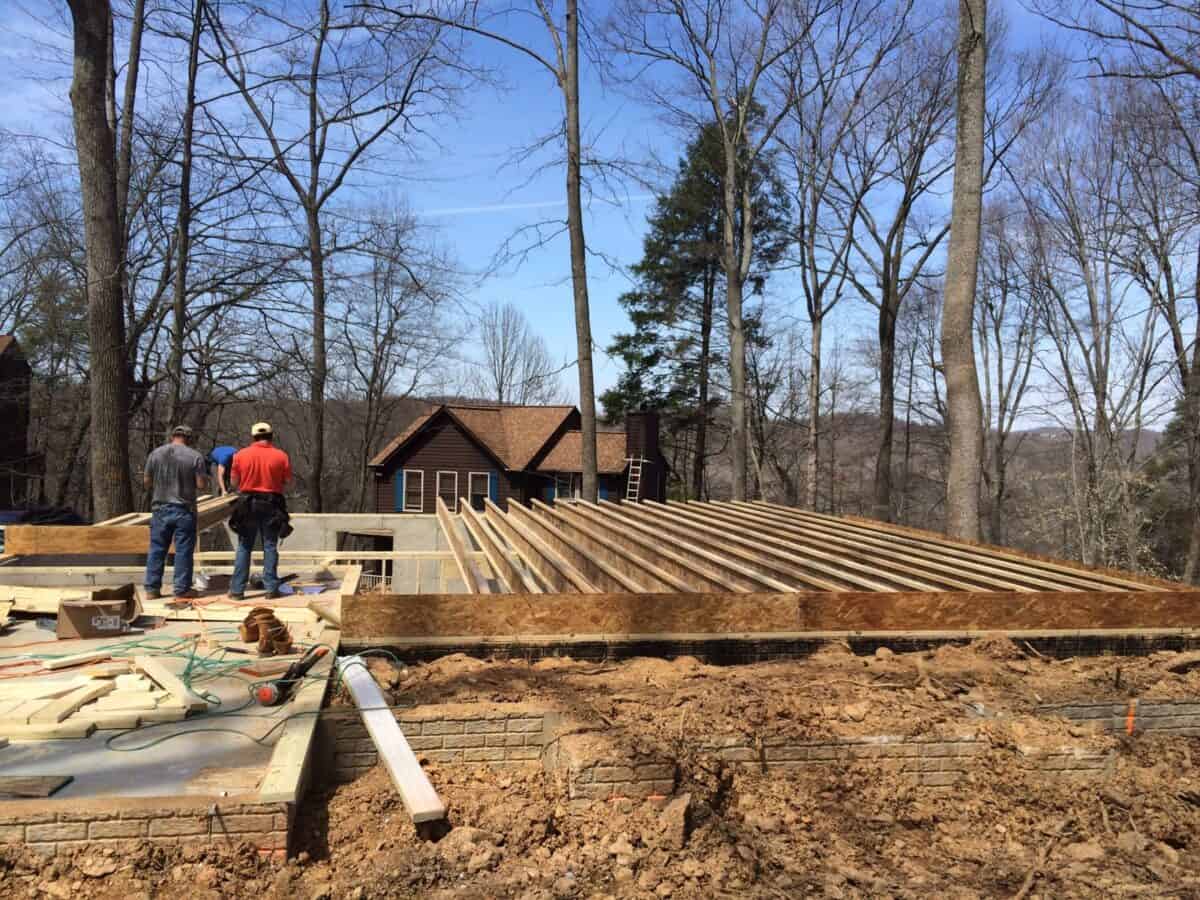
| Apr 12 | Foundation done, floor joists going on | 5½ |
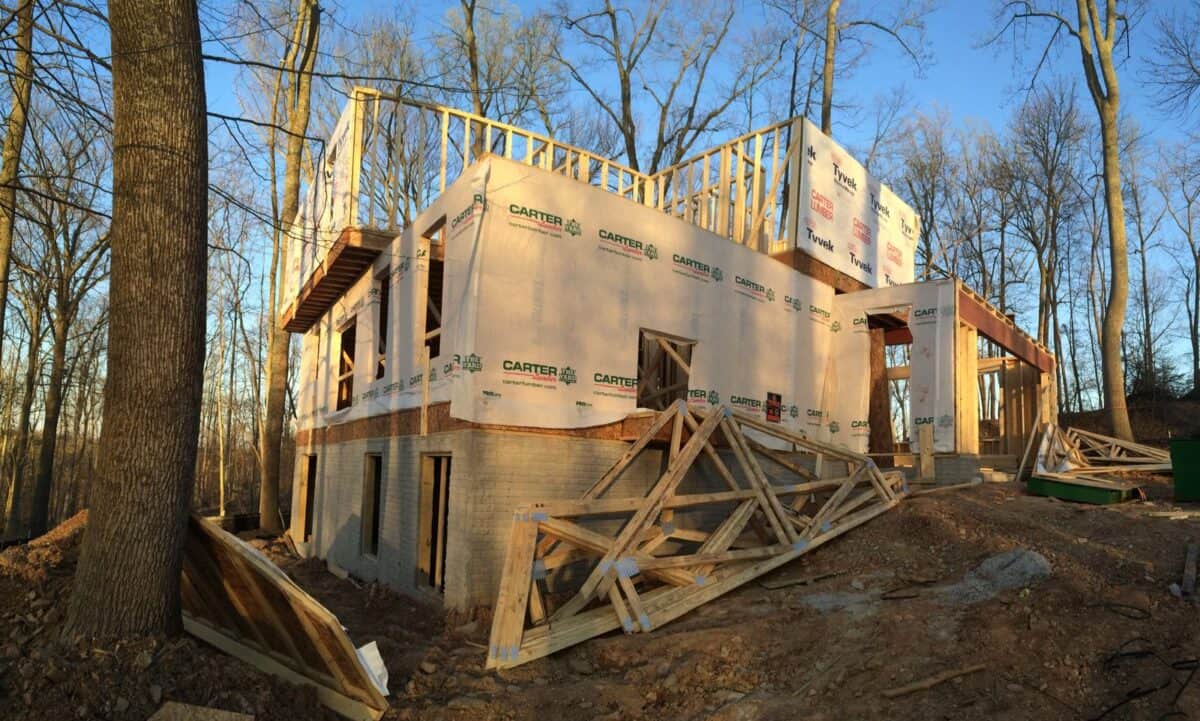
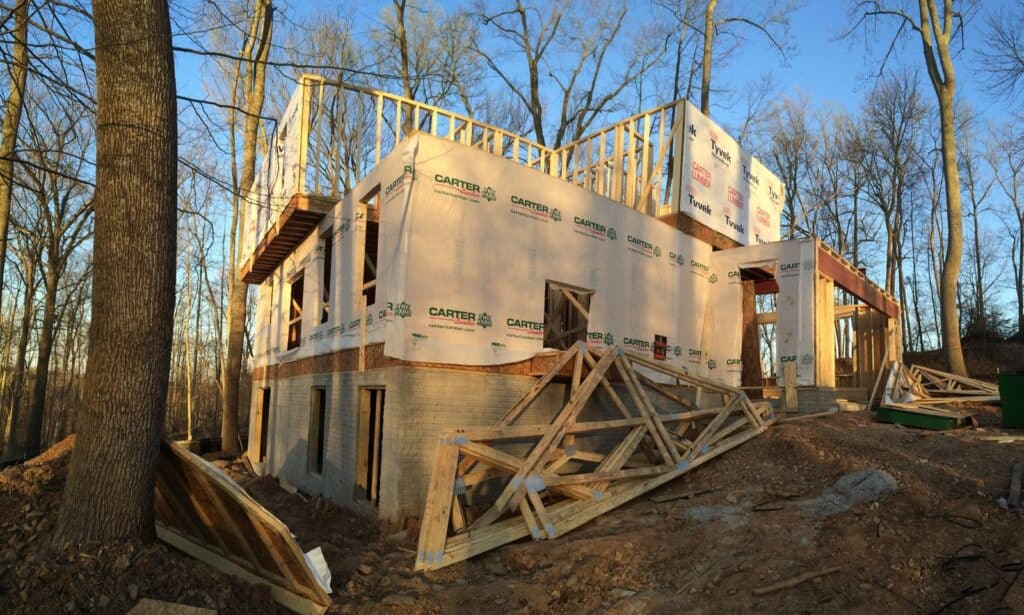
| Apr 20 | House framed and wrapped | 6½ |
| Apr 22–23 | Roof trusses set | 7 |
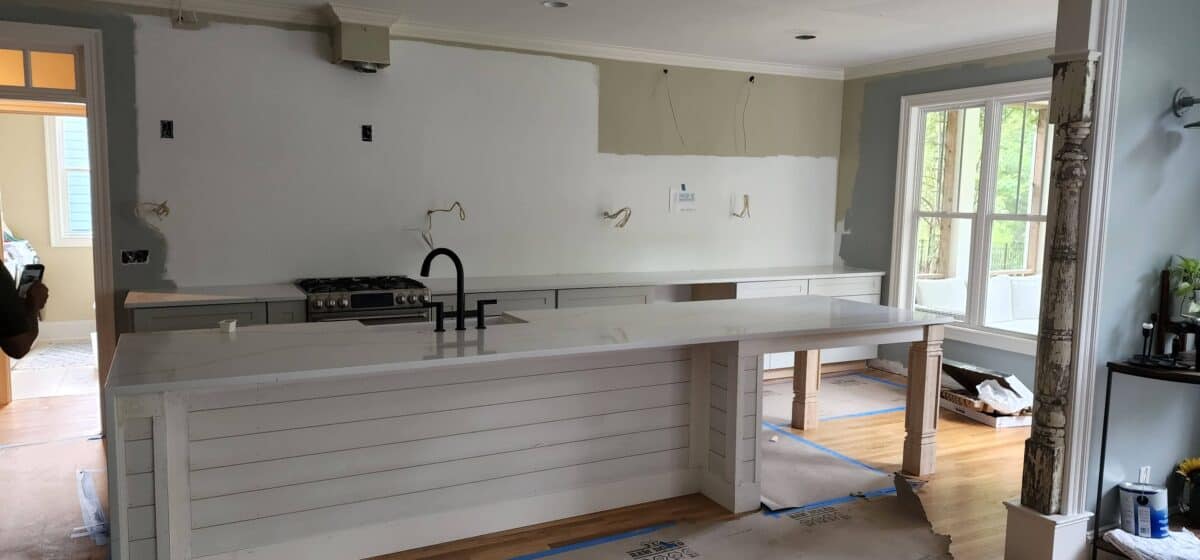
| May 1 | Final kitchen cabinet drawings signed off | 8 |
| May 16 | Rough-ins done, insulation going in | 10 |
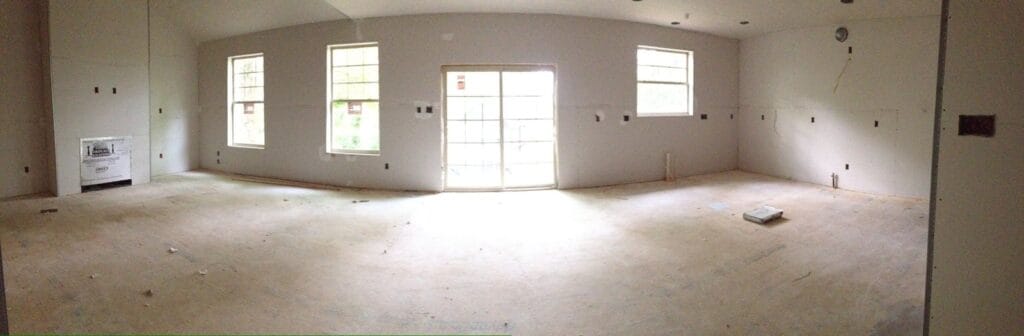
| May 21 | Drywall hung | 11 |
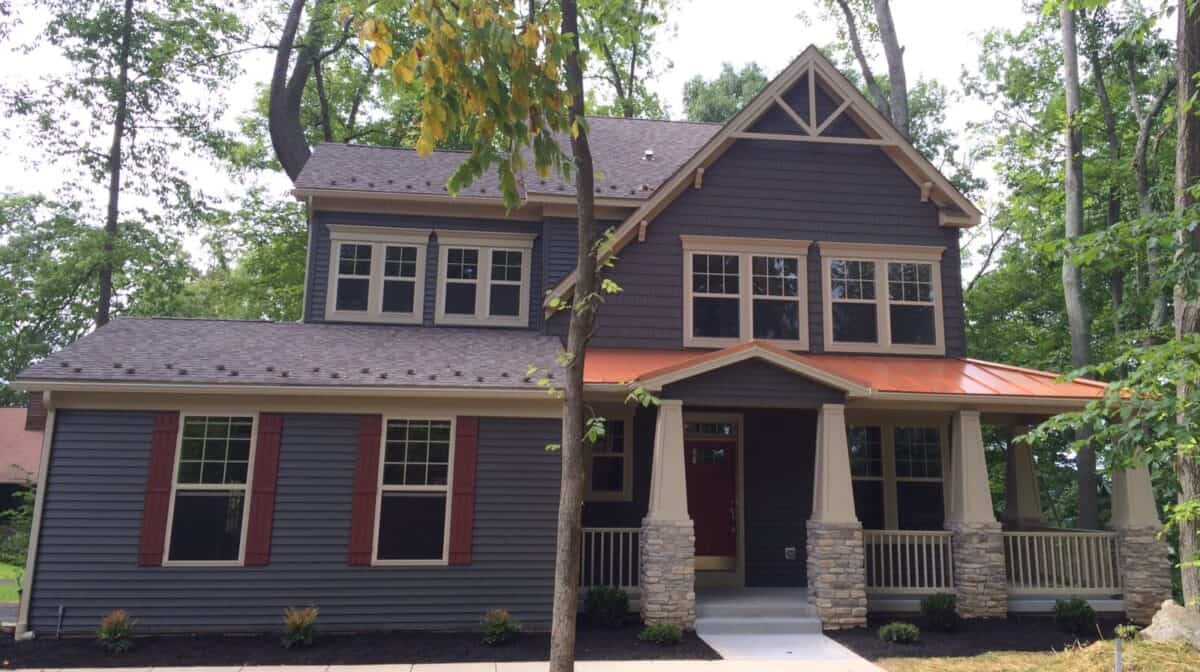
| Jul 2 | Siding, stone and porch roof on | 17 |
| Jul 19 | Finished outside, landscaping in | 19 |
| Summer 2014 | Closing, keys and move-in | — |
What went fast, and what didn’t
Fast: framing through drywall. The floor joists went on April 12 and the drywall was hung May 21. That’s under six weeks to go from a foundation to a closed-in house with every wire and pipe inside it. It’s exciting, and it also means decisions about outlets, lighting and plumbing come at you quickly.
Slow: everything before the dirt. From signing in September to clearing day in March was about six months of plans, Jon’s revisions, design-center appointments and waiting. And the interior finishes after drywall always feel slower than they are, because a lot of trades come and go and progress is harder to see.
What stretches a build near Wilmington
- Permits and HOA review. Many neighborhoods here have an architectural review committee that has to approve your plans before the county issues a permit.
- The lot itself. A lot that needs fill, a specific elevation for its flood zone, or a septic permit (common in parts of Pender and Brunswick counties) adds steps before anything is built. See what to check about flood zones.
- Weather. Atlantic hurricane season runs June 1 through November 30, and a wet week can stop concrete and roofing. Ask your builder how their schedule plans around it. Our hurricane guide for buyers covers the bigger picture.
- Selections and change orders. A late decision or a change after framing is one of the easiest ways to add weeks.
- Materials and labor. Some items take months to arrive. Ask which ones are “long-lead” and order those first.
How to plan your life around a build
Plan for the whole timeline, not just construction. That means a lease that runs at least a few months past the builder’s estimated finish date (or one that can go month to month), a plan for storage, and a clear answer from your lender about how your financing works during the build and when it converts to a regular mortgage. We rented a condo in north Frederick, Maryland (this was our pre-coast chapter, before we moved to Wilmington) for the whole build, about nine months, and our construction loan was interest-only until it converted at the certificate of occupancy. Your lender can walk you through your own options; I’m not a lender and this isn’t financial advice.
Want to see what each of those stages actually looks like? I put the photos in order in new construction stages, from lot to keys.
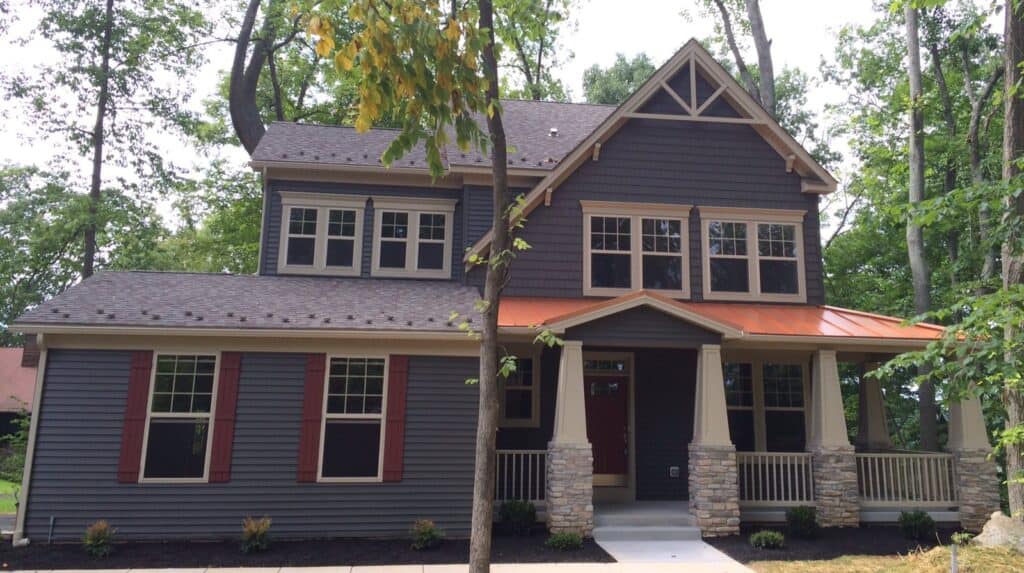
Moving in that summer of 2014 felt surreal. We’d gone from a small older starter home to a rental, raising a newborn without ever really feeling settled, so move-in day was the first big step of Jon and me feeling like we’d actually made it happen. And our daughter Addie took her very first steps in that house.
Frequently asked questions
How long does it take to build a house?
In 2025 the U.S. average was about 8.8 months from building permit to completion: roughly 1.4 months to start and 7.4 months of construction, according to an NAHB analysis of Census Bureau data. Plan a few more months before the permit for design, financing and selections.
How long does it take to build a house in North Carolina?
North Carolina is in the Census Bureau’s South Atlantic region, which averaged about 7.6 months from permit to completion in 2025, one of the faster regions. Your lot, builder, permits and weather will change that.
Is it faster to buy from a builder or build on my own lot?
Usually from a builder. Homes built for sale averaged about 7.4 months from permit to completion in 2025, while homes built on an owner’s lot by a hired contractor averaged about 11.7 months.
How long did your own build take?
About four and a half months from clearing day to a finished exterior, and about nine months from signing with our builder to moving in.
Keep exploring
Before you sign anything, read what I’d tell anyone before they build. Comparing communities? New construction homes near Wilmington covers the communities and builders around here, and the Start Here buying guide covers the rest of the process.
A quick note from me

Every build has its own timeline, and that’s okay! If you’re thinking about building near Wilmington, I’d love to help you plan for the whole journey, not just the construction part, so your move feels exciting instead of rushed.
Talk soon,
Tabi
Dreaming about building your own slice of the coast? Let’s find your home between the river and the sea.
Tabetha Klein, REALTOR® | Coldwell Banker Sea Coast Advantage
Build times are national and regional averages or our own experience, not a promise for any specific builder or lot. Tabetha Klein, REALTOR® | Coldwell Banker Sea Coast Advantage · 910-983-8963 · www.makingilmhome.com. Each office is independently owned and operated. Equal Housing Opportunity.