Wilmington water quality is the number-one question I get from relocating buyers. If you’re relocating to the Wilmington area from somewhere like DC, New York, Raleigh, or up north, there’s a good chance one of your late-night Google searches has been some version of “Cape Fear River PFAS GenX Chemours.” You found the articles. Maybe the documentary. And now you’re staring at listings in Leland or Hampstead wondering whether you should worry about the water coming out of the tap.
This is one of the most common questions I get from buyers, so I wrote a whole set of guides on it. This is the big-picture overview — what the concern actually is, what people are asking, and where to dig deeper. I’m a REALTOR®, not a toxicologist, so everything here is sourced from public utility records, EPA guidance, and local reporting, with links throughout.
The short version on Wilmington water quality
CFPUA, H2GO, Brunswick County, and Pender County Utilities each report that their treated water meets current federal standards, and PFAS levels have dropped sharply since their treatment upgrades — each utility publishes its latest water quality reports, linked in the county guides below. But “the water” isn’t one thing here — three different counties draw from the same river and treat it three different ways, so the honest answer for your specific home depends on which county and which utility serves it. That’s the single most important thing to figure out before you write an offer.
Moving to Wilmington?
Grab my free Moving to Wilmington Buyer Guide — neighborhoods, price ranges, and the local stuff nobody tells you before you fall for a house between the river and the sea.
Why everyone’s talking about the water here
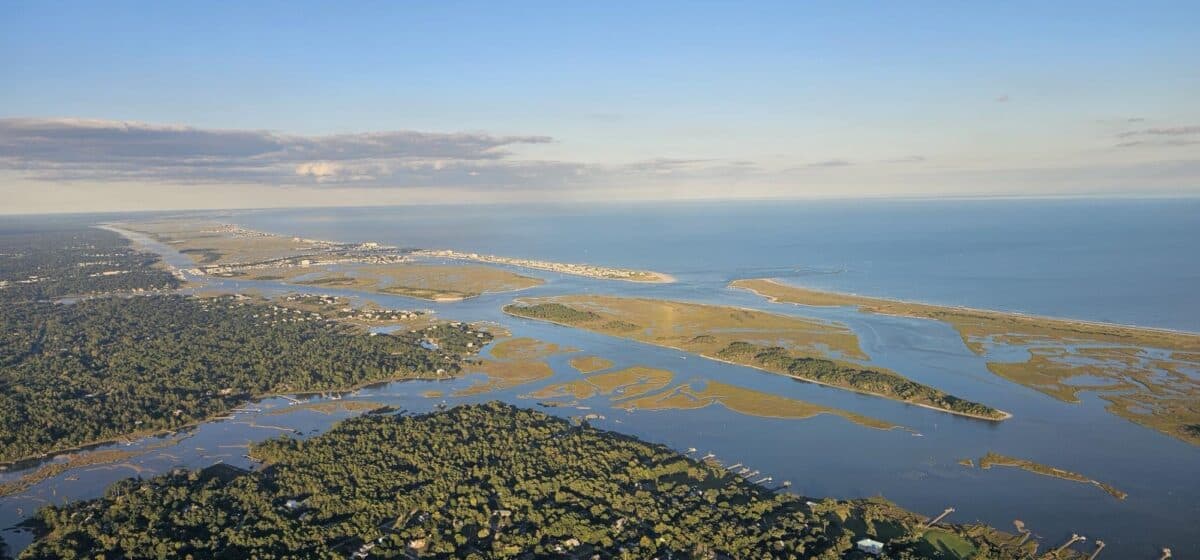
In 2017, researchers and the Wilmington StarNews revealed that the Cape Fear River — the drinking-water source for hundreds of thousands of people downstream — contained GenX and other PFAS “forever chemicals.” State investigators traced the contamination to the Chemours (formerly DuPont) Fayetteville Works plant about 100 miles upstream, which had been discharging these compounds into the river for years.
PFAS are a family of thousands of synthetic chemicals used in things like nonstick coatings and firefighting foam. They’re called “forever chemicals” because they don’t break down in the environment or the body, and newer research links some of them to health effects at very low levels. A 2019 Environmental Working Group study found that Brunswick County had, by far, the highest PFAS levels of 44 U.S. locations tested — because it sits farthest downstream and, at the time, used only conventional treatment.
That’s the origin of the anxiety. The good news is that what happened next — a wave of lawsuits, filtration upgrades, and brand-new treatment plants — is a genuinely encouraging story, and it looks different in each county.
The three counties, three different answers
Here’s the quick comparison. Each county has its own deep-dive guide linked below.
New Hanover County (Wilmington) — CFPUA. The Cape Fear Public Utility Authority added eight deep-bed granular activated carbon (GAC) filters at its Sweeney plant in 2022. Treated water now tests at or near non-detect for PFAS and GenX. → Read the full New Hanover / CFPUA water guide
Brunswick County (Leland, Southport, Oak Island) — the biggest turnaround. The county that once had the worst numbers is going all-in on reverse osmosis, one of the few treatment methods shown to remove a wide range of PFAS. H2GO’s Belville plant already delivers RO-treated aquifer water to the Leland area, and Brunswick County’s Northwest plant RO upgrade is expected to be fully operational by the end of 2026, according to an August 2026 county update. → Read the full Brunswick County water guide
Pender County (Hampstead, Rocky Point) — GAC plus a new plant coming. Pender County Utilities uses GAC filtration and tests within EPA’s legal limits, and is planning a new groundwater treatment plant for Hampstead, which was still in permitting as of early 2026. Note that many Pender properties are on private wells or a different utility. → Read the full Pender County water guide
The questions buyers actually ask
Does Wilmington’s tap water meet federal standards? The region’s major utilities — CFPUA, H2GO, Brunswick County, and Pender County Utilities — each report that their treated water meets current federal drinking-water standards. Where reasonable people differ is the gap between “legally compliant” and “optimal,” which I break down county by county.
What’s the difference between the legal limit and the health advisory? The EPA set its first enforceable PFAS limits in 2024 — 4 parts per trillion (ppt) for PFOA and PFOS. Its non-binding health advisory, though, is 0.004 ppt — essentially zero. Almost every public water system in America sits somewhere between those two numbers. In 2025 the EPA said it would keep the 4 ppt limits but push the compliance deadline from 2029 to 2031. In May 2026 it formally proposed that extension, along with rescinding the limits for GenX, PFHxS, PFNA, and a PFAS mixture. Public comment closed July 20, 2026, and as of September 2026 neither change is final, so the 2024 rules remain on the books while they’re debated.
How do New Hanover, Brunswick and Pender counties treat their tap water? CFPUA (New Hanover) uses granular activated carbon filtration at its Sweeney plant. The H2GO Belville plant uses reverse osmosis, and Brunswick County is adding reverse osmosis at its Northwest plant. Pender County Utilities uses GAC filtration. Each utility publishes its own water quality test results; check the county guides above, then confirm which utility serves your address.
Do I need a filter? Not to meet federal standards — but if you want your household’s exposure at functionally zero regardless of utility, an under-sink reverse osmosis filter ($200–$500 installed) does exactly that. I think it’s a reasonable line item on a home you’re spending hundreds of thousands on, especially if you want extra peace of mind. Health agencies note that infants, pregnant people, and people with weakened immune systems can be more sensitive to contaminants.
What about well water? Plenty of rural properties in Pender and Brunswick are on private wells, which are not covered by any utility’s treatment. If you’re buying a well home, add a full PFAS panel to your inspection contingency — the standard well test won’t catch it. Clean Cape Fear keeps a current list of local testing resources.
What you can actually do
Three simple moves cover almost everyone:
- Find out who serves the property. Check the top of the water bill on the seller’s disclosure, or look up any utility by ZIP on the EWG Tap Water Database. Not sure? That’s what I’m here for.
- Read the guide for your county (linked above) so you know exactly what your future utility filters and what it doesn’t.
- Consider an under-sink RO filter if you want certainty no public utility can promise.
Comparing areas? Water is one factor among many. See the best places to live near Wilmington and the cost of living in Wilmington, including utility costs.
The bottom line
None of this should scare you off the coast. The utilities here report that their water meets federal standards, their reported PFAS levels have come down, and the region has invested tens of millions of dollars in advanced treatment to fix a problem it didn’t create. Knowing the difference between “compliant” and “optimal” is just smart due diligence — the same way you’d check flood zones, insurance quotes, or HOA covenants before you buy.
House hunting anywhere between the river and the sea and want help figuring out which utility serves which neighborhood — or a referral to a local water-testing lab? Reach out anytime at 910-983-8963. That’s literally what I’m here for.
Tabetha Klein is a REALTOR® with Coldwell Banker Sea Coast Advantage in Wilmington, NC, serving New Hanover, Brunswick, and Pender counties. This post is informational and is not health, legal, or environmental advice. Always consult licensed professionals for testing and treatment decisions on your specific property. Each office is independently owned and operated. Equal Housing Opportunity.
Sources & further reading
- NC DEQ: GenX Investigation
- Environmental Working Group: North Carolina PFAS contamination spotlight
- EPA: PFAS National Primary Drinking Water Regulation (2024)
- EPA: 2025 announcement keeping PFOA/PFOS limits, extending compliance to 2031
- Clean Cape Fear: PFAS in NC & water testing resources
- Environmental Working Group: Tap Water Database (look up any utility)